
Winter 2002 Newsletter
Winter winds will blow in the harshest weather of the year over the next few weeks. It's important to be sure your best friend is protected, or falling temperatures could lead to rising vet bills.
With a little extra attention to your pets' special needs, you can keep them safe and healthy until spring's milder days arrive.
Protect your pet from the cold Don't let your pet's natural fur coat fool you into believing he doesn't feel the cold. Unless your pet has been on a regular indoor-outdoor schedule throughout the fall and into the winter, he may be uncomfortable out-of-doors on these colder days.
Indoor pets should never be left outside for extended periods in cold temperatures. If you have a short-haired or miniature dog, dress him in a dog coat or sweater and keep his walk short on extremely cold days. If your pet suffers medical conditions like diabetes, heart disease or kidney disease, be aware that it can compromise his ability to regulate body heat so keep his outdoor excursions short. Puppies do not tolerate the cold as well as adult dogs
Some animals can remain outside safely longer than others. For example, long-haired breeds will do better in cold weather than short-haired breeds. And large dogs will handle the cold better than cats and small dogs that have to wade shoulder-deep in the snow. However, even an outdoor dog needs shelter, such as a well-insulated dog house with deep, clean bedding of hay or straw.
The physical stress of very cold temperatures can make pets more susceptible to illness or infection. As a rule, a temperature of 10 degrees Fahrenheit or below is too cold for any pet, according to veterinarians at the Kansas State University Veterinary Teaching Hospital, and a pet that is very young, old or ill will have even less tolerance for the cold.
Other Winter Safety Tips
Here are some other things to keep in mind to "winter-safe" your pet:
Beware of antifreeze - it is extremely poisonous and as little as a few teaspoons can kill a small dog or a cat. Unfortunately, the chemical has a sweet taste that animals like, so it's critical to keep it out of reach and clean up even small amounts that drip onto the floor or driveway.
Don't use metal water dishes outside; your pet's tongue could stick to the frozen metal. Purchase a non-freeze water bowl or use a heavy plastic dish and check the water several times a day to be certain it is not frozen.
Never let your dog off-leash in snow or ice. Dogs can lose their scent in snow and ice and become lost. In a snowstorm they may panic and run away. According to the ASPCA, more dogs are reported lost during this time of the year than in any other season, so make be sure your pets always wear their identification tags.
Chemicals used to melt ice on sidewalks and streets present another hazard. It can become stuck in your pets' pads or on their coats. If they lick at their paws, they may make themselves sick. It's a good idea to clean your pet's legs and belly with a cloth and some warm water to remove the substance.
Remember that cats like to sleep under the hoods of cars in the winter. To avoid injuring your pet, always bang on the hood and wait a few seconds before starting the engine so your cat will have the chance to escape.
Beware of hypothermia and frostbite In extreme cold, pets can develop hypothermia, a condition that occurs when the animal is not able to keep his body temperature in normal range. In mild cases of hypothermia, a pet will shiver and show signs of lethargy. As the condition progresses, the animal's muscles will stiffen, her heart rate and breathing will slow down, and she will become unresponsive.
If you notice these symptoms, take action immediately. The American Animal Hospital Association recommends wrapping your pet in blankets - if possible including a hot water bottle or heating pad. If the animal doesn't respond, take your pet to your veterinarian, who can monitor heart rate and blood pressure and give warm fluids through an IV, if needed.
If there is a severe wind chill, frostbite also becomes a hazard. Generally the tips of tails and tips of the ears are most susceptible. If you suspect your pet may have frostbite, bring her into a warm environment and soak her extremities in warm (not hot) water for about 20 minutes, recommends the American Animal Hospital Association. This will melt the ice crystals and restore circulation. However, it's important not to rub the frostbitten tissue because the ice crystals can damage the tissue. Once your pet is warm, wrap her up in some blankets and take her to the veterinarian. Your veterinarian can assess the damage and treat your pet for pain or infection if necessary.
Coping with winter depression Unfortunately, dogs confined to the house because of severe winter weather may lack proper exercise. This can be a real problem for energetic dogs who require lots of active play. Frustrated at being trapped indoors, they may develop behavioral problem, like barking or chewing on furniture, and may even display signs of depression.
You can help by giving your pet more attention and encouraging active play whenever possible. On days when the weather permits, be sure your dog gets a good long walk or a romp with canine friends at the dog park.
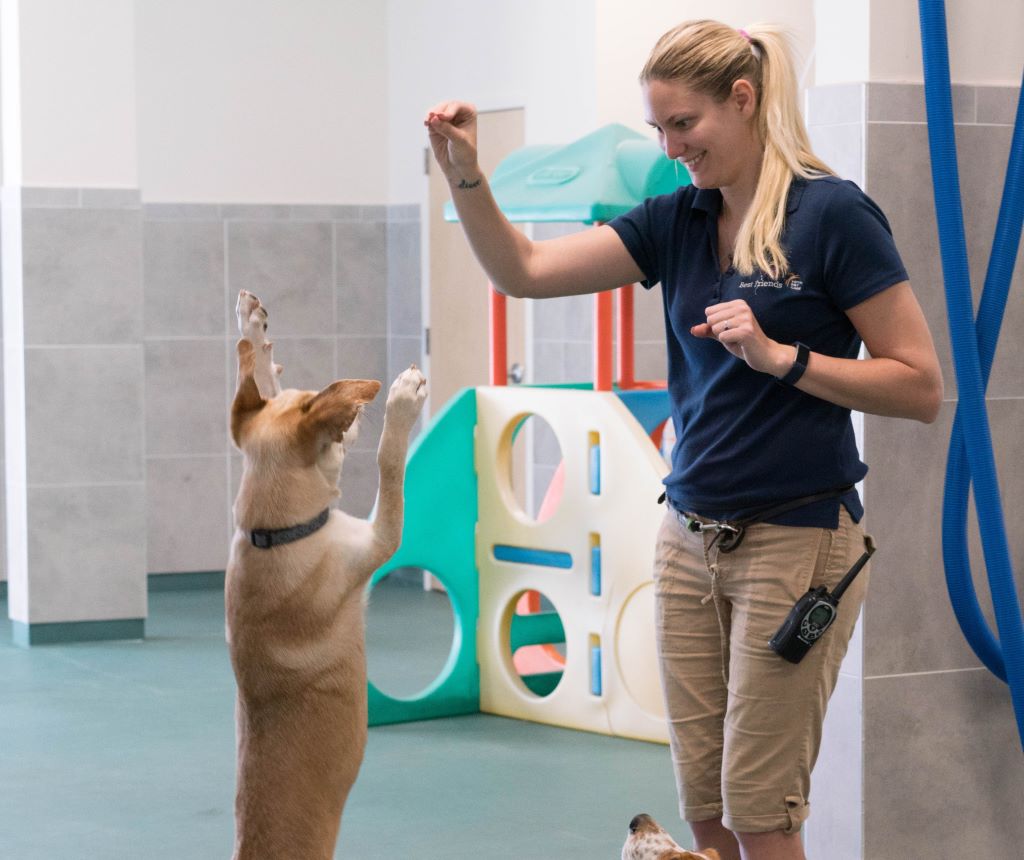
If snow and ice simply make outdoor play impossible, consider enrolling your pet in a doggy day camp program. These programs are designed to let dogs exercise and play with other dogs in a safe, supervised, indoor environment. Most dogs can benefit significantly by participating just once or twice each week.
For more information about doggy day camp programs, see the Services section of this website. For more information about recognizing and handling hypothermia and frostbite in pets, see the AAHA website at http://www.healthypet.com.
Don't Wait to Prepare Holiday Boarding for Your Pet Is Doggy Day Camp Right for your Pet? Kennel of the Future Survey Finds Pet Owners Want "Extras"
More articles
Job Opportunities | Privacy Notice | Terms of Use Dog and Pet Care: dog boarding | dog kennel | dog training
Best Friend of the Week!